
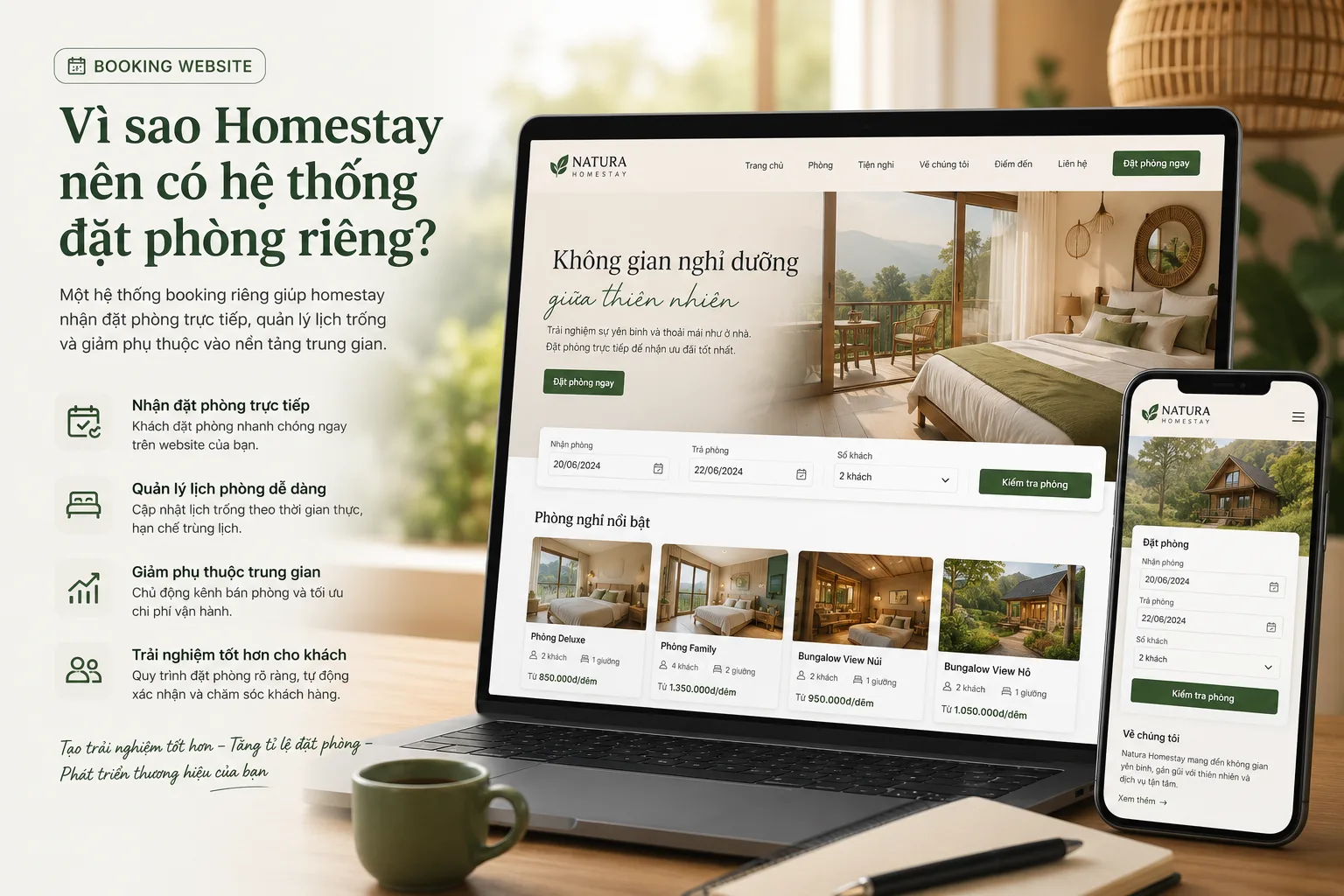
Why Should Homestays Have Their Own Booking System?
Online booking platforms make it easier for homestays to reach travelers. However, as the business grows, relying entirely on third-party platforms can make it harder to manage reservations, build a distinctive brand, and maintain direct relationships with guests.
This is where having a dedicated website with an integrated booking system becomes valuable.
1. Accept direct bookings
Instead of requiring guests to find the property through another platform, a website can allow them to explore the property and make a reservation in one place.
The booking journey can be as simple as:
Check-in → Check-out → Room → Guests → Availability → Booking.
A clear booking flow reduces unnecessary conversations and makes it easier for guests to complete their reservation.
2. Manage room availability
Managing availability manually becomes increasingly difficult when reservations arrive from multiple channels.
A booking system provides a central calendar where the team can quickly see available rooms, confirmed reservations, upcoming check-ins, and pending bookings.
3. Reduce double bookings
Reservations may arrive through social media, phone calls, a website, or other booking channels.
Without an organized availability system, overlapping reservations can happen.
Keeping availability information centralized helps reduce booking conflicts and provides guests with a more professional experience.
4. Build your own brand
On large booking platforms, travelers often compare dozens of properties at the same time.
A dedicated website gives your homestay its own digital space.
You can showcase your rooms, amenities, story, nearby attractions, guest experiences, and photography without competing listings appearing beside you.
5. Reduce dependence on third-party platforms
Having your own booking website does not mean abandoning major booking platforms.
Both channels can work together.
Third-party platforms can help attract new guests, while your website becomes a channel for direct reservations and returning customers.
This gives the business more control over its long-term booking strategy.
6. Automate the booking experience
The customer journey does not end when a reservation is submitted.
A booking system can support additional processes such as:
Booking confirmation → Email notifications → Check-in instructions → Reminders → Payment status → Guest management.
Tasks that previously required manual work can become part of one connected workflow.
More than a Homestay Website
A modern homestay website can be much more than a gallery with a phone number.
It can connect the entire customer journey:
Discover → Explore rooms → Check availability → Book → Pay → Stay.
When designed around the way the property actually operates, a booking website can provide guests with a better experience while giving the business greater control over reservations, operations, and its own brand.
Các nền tảng đặt phòng trực tuyến giúp homestay tiếp cận khách hàng nhanh chóng. Tuy nhiên, khi hoạt động kinh doanh phát triển, việc phụ thuộc hoàn toàn vào các nền tảng trung gian có thể khiến chủ homestay gặp khó khăn trong việc quản lý booking, xây dựng thương hiệu và duy trì mối quan hệ trực tiếp với khách hàng.
Đó là lúc một website tích hợp hệ thống đặt phòng riêng trở nên hữu ích.
1. Nhận booking trực tiếp từ khách hàng
Thay vì khách phải tìm homestay trên một nền tảng khác, website cho phép họ xem thông tin và gửi yêu cầu đặt phòng ngay tại một nơi.
Khách có thể:
Chọn ngày nhận phòng → ngày trả phòng → loại phòng → số lượng khách → kiểm tra phòng → gửi booking.
Một quy trình rõ ràng giúp khách dễ dàng hoàn tất việc đặt phòng mà không cần nhắn tin qua lại nhiều lần.
2. Quản lý lịch phòng dễ dàng hơn
Một trong những vấn đề phổ biến khi nhận booking qua nhiều kênh là việc kiểm tra lịch trống.
Nếu quản lý thủ công bằng tin nhắn hoặc bảng tính, nhân viên phải liên tục kiểm tra xem phòng nào đã được đặt và phòng nào còn trống.
Hệ thống booking có thể tập trung thông tin này vào một lịch quản lý duy nhất.
Chủ homestay có thể nhanh chóng biết:
Phòng nào đang trống, phòng nào đã được đặt, khách nào sắp check-in và booking nào đang chờ xác nhận.
3. Hạn chế tình trạng trùng lịch
Khi booking đến từ Facebook, điện thoại, website và các kênh khác nhau, việc cập nhật không kịp thời có thể dẫn đến tình trạng hai khách cùng đặt một phòng trong cùng thời gian.
Một hệ thống quản lý availability giúp kiểm soát tình trạng phòng trước khi khách thực hiện booking.
Điều này giúp giảm sai sót và mang lại trải nghiệm chuyên nghiệp hơn cho khách hàng.
4. Xây dựng thương hiệu riêng cho homestay
Trên các nền tảng đặt phòng, khách hàng thường nhìn thấy rất nhiều homestay cùng lúc.
Website riêng tạo ra một không gian hoàn toàn dành cho thương hiệu của bạn.
Bạn có thể giới thiệu không gian, phòng nghỉ, tiện nghi, câu chuyện thương hiệu, địa điểm tham quan xung quanh, đánh giá của khách và hình ảnh thực tế theo cách mình muốn.
Thay vì chỉ là một lựa chọn giữa hàng trăm nơi lưu trú, homestay có cơ hội tạo ra một trải nghiệm thương hiệu riêng.
5. Giảm phụ thuộc vào nền tảng trung gian
Các nền tảng booking vẫn là một kênh bán phòng rất quan trọng và website riêng không nhất thiết phải thay thế chúng.
Hai kênh hoàn toàn có thể hoạt động song song.
Các nền tảng trung gian giúp tìm kiếm khách hàng mới, trong khi website có thể trở thành kênh để nhận booking trực tiếp và chăm sóc khách hàng quay lại.
Về lâu dài, điều này giúp homestay chủ động hơn trong chiến lược bán phòng.
6. Tự động hóa trải nghiệm đặt phòng
Một booking không chỉ kết thúc khi khách nhấn nút đặt phòng.
Hệ thống có thể tiếp tục hỗ trợ những bước sau đó như:
Xác nhận booking → gửi email → hướng dẫn check-in → nhắc lịch → quản lý trạng thái thanh toán → lưu thông tin khách hàng.
Những thao tác trước đây phải thực hiện thủ công có thể được xử lý ngay trong một quy trình thống nhất.
Website không chỉ để giới thiệu Homestay
Một website homestay tốt không nên chỉ có vài hình ảnh đẹp và số điện thoại liên hệ.
Nó có thể trở thành một phần trong hệ thống vận hành:
Giới thiệu → tìm phòng → kiểm tra lịch → booking → thanh toán → quản lý khách hàng.
Khi được xây dựng phù hợp với cách homestay vận hành, website không chỉ giúp khách hàng đặt phòng thuận tiện hơn mà còn giúp doanh nghiệp quản lý booking hiệu quả và chủ động hơn trong việc phát triển thương hiệu của mình.