
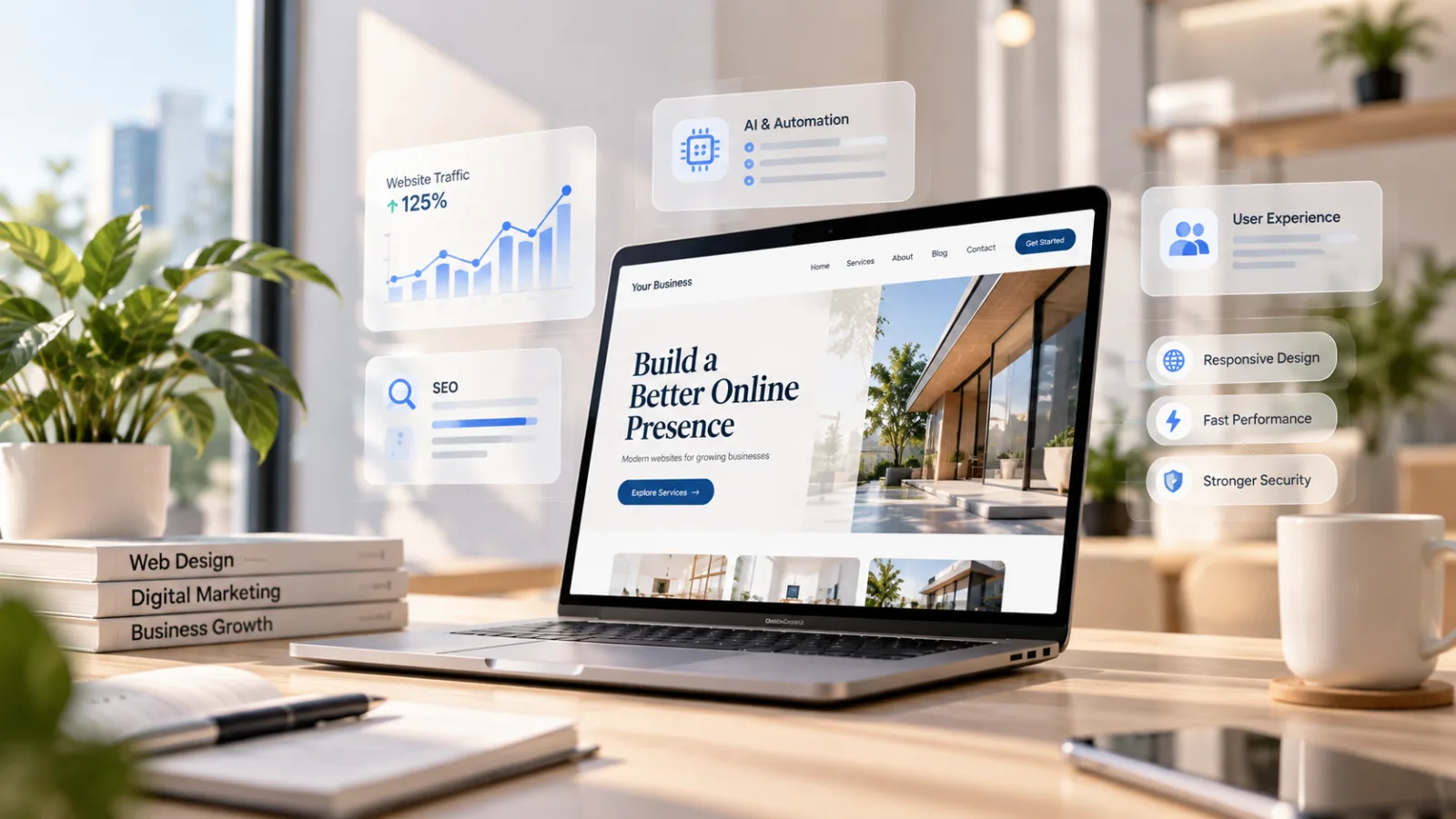
Website Design Trends in 2026
A Beautiful Website Doesn't Always Mean Better Business Results
In today's digital landscape, a website is no longer simply a place to showcase business information. It has become an essential platform for connecting with customers, building brand credibility, and supporting business growth.
In 2026, advancements in artificial intelligence and automated website builders have made creating a website more accessible than ever.
However, the real question is no longer "How can I build a website?" but rather "How can my website deliver real value to my business?"
Here are some of the key website design and development trends businesses should consider in 2026.
1. Minimalist Design and User-Centred Experiences
A professional website doesn't need excessive animations, complicated layouts, or unnecessary visual elements.
Instead, modern web design focuses on clarity, usability, and seamless navigation.
Key elements include:
- Clean, spacious, and consistent layouts.
- Simple and intuitive navigation.
- Clear calls to action (CTAs).
- Responsive design across desktop, tablet, and mobile devices.
- High-quality visuals that reflect the brand's identity.
Great design goes beyond making a strong first impression. It helps visitors find information, explore services, and take meaningful actions with ease.
2. Website Performance and Loading Speed Matter More Than Ever
Today's users expect websites to load quickly and perform smoothly.
Large images, unnecessary scripts, poorly optimised code, and unsuitable hosting infrastructure can negatively affect the browsing experience.
Businesses should prioritise:
- Optimised images and modern file formats.
- Efficient JavaScript and CSS.
- Improved Core Web Vitals.
- Reliable hosting and server infrastructure.
- Regular website performance monitoring.
A fast, reliable website creates a better user experience and provides a stronger technical foundation for search engine optimisation.
3. SEO Should Be Built Into Website Development
Search engine optimisation should not be treated as an afterthought.
From the earliest development stages, websites should be structured to support search visibility, accessibility, and long-term content growth.
Important SEO considerations include:
- Clear website architecture and readable URLs.
- Optimised page titles and meta descriptions.
- XML sitemaps and appropriate robots directives.
- Valuable, relevant, and well-organised content.
- Mobile-friendly design.
- Google Search Console and analytics integration.
SEO is a long-term investment. Building a technically sound website from the beginning makes future optimisation more efficient.
4. AI and Automation Are Transforming Website Functionality
Artificial intelligence is changing more than the way websites are designed.
It is also creating opportunities for businesses to automate workflows, improve customer interactions, and reduce repetitive administrative tasks.
Examples include:
- Automated customer enquiry handling.
- AI-powered customer support chatbots.
- Online appointment and booking systems.
- Automated email notifications.
- Customer data management.
- Business reporting and analytics.
However, integrating AI should never be the goal on its own.
The best digital solutions are those that address real business challenges and improve operational efficiency.
5. From Business Websites to Complete Digital Platforms
One of the most significant developments in modern web technology is the growing integration of websites with business management systems.
Instead of functioning solely as an online brochure, a website can become an active part of daily business operations.
For example, service-based businesses can integrate:
- Online appointment scheduling.
- Customer account management.
- Booking and reservation systems.
- Online payments.
- Order and service tracking.
- Automated notifications and reporting.
These capabilities help businesses streamline operations while offering customers a more convenient digital experience.
A well-designed website should not only represent a business online but also support the way that business operates.
6. Security and Scalability Are Essential for Long-Term Growth
As websites increasingly handle customer information, user accounts, and online transactions, security has become a fundamental requirement.
Businesses should consider:
- HTTPS and SSL certificates.
- Secure authentication and access controls.
- Personal data protection.
- Regular backups.
- Software updates and maintenance.
- Reliable hosting infrastructure.
Scalability is equally important.
A website should be designed with future business growth in mind, allowing new features, integrations, and services to be introduced without rebuilding the entire system.
FEB Digi – Building Digital Experiences That Deliver Real Value
At FEB Digi, we believe a successful website should do more than look impressive.
It should create meaningful experiences, support business operations, and provide a strong foundation for long-term growth.
Our services focus on:
- Professional website design and development.
- User interface and user experience (UI/UX) design.
- Responsive and mobile-friendly websites.
- SEO-ready website architecture.
- Custom web applications and business systems.
- Performance optimisation and ongoing technical support.
From corporate websites and e-commerce platforms to online booking systems and custom management solutions, we approach every project with a focus on practical business needs.
As digital technologies continue to evolve, businesses need websites that are not only visually engaging but also reliable, functional, and ready to grow.
A website is more than your business's online presence. It is the foundation of a better digital experience for your customers.
Looking to build or upgrade your business website?
Discover how FEB Digi can support your next digital project.
Visit: https://febdigi.com